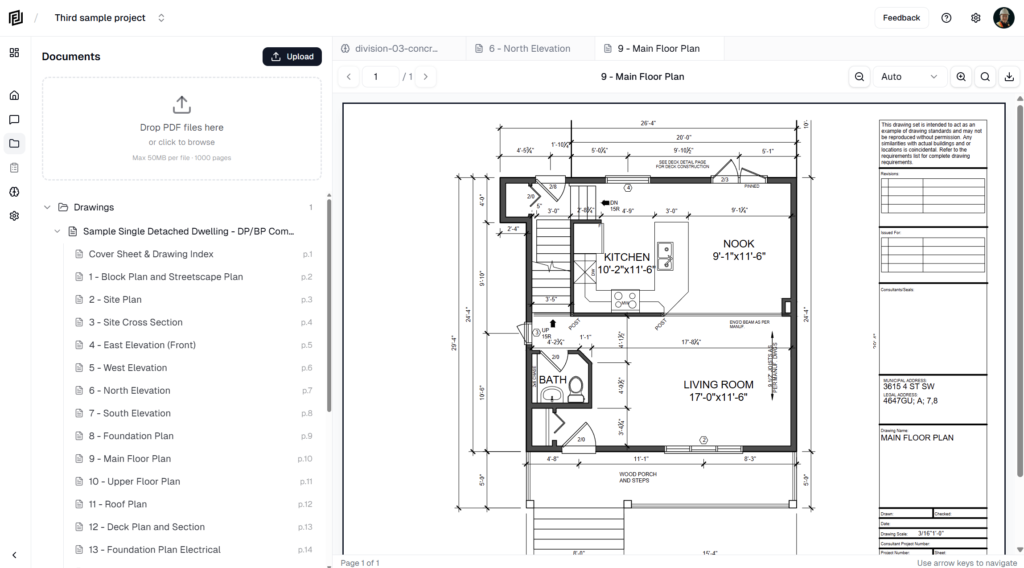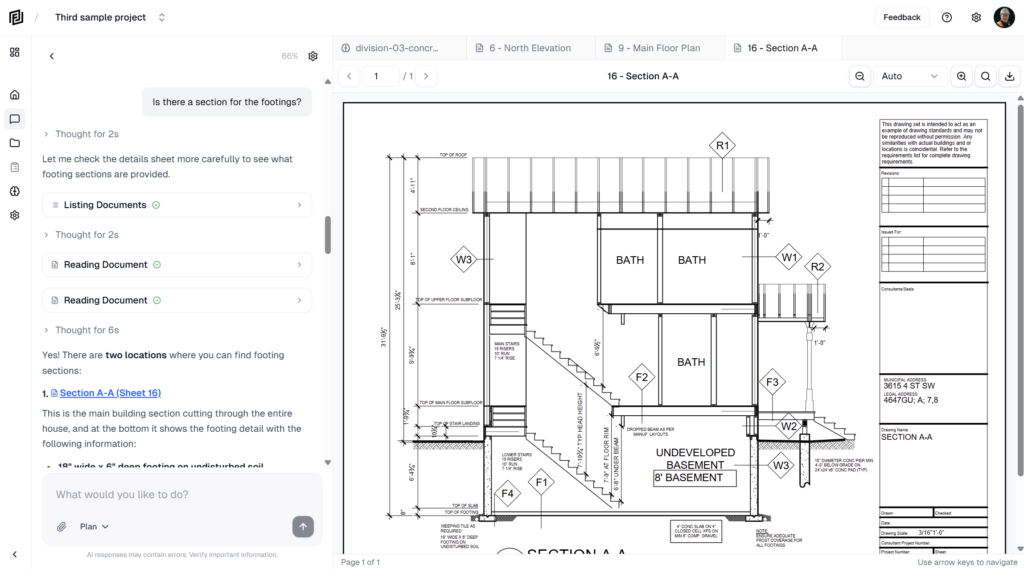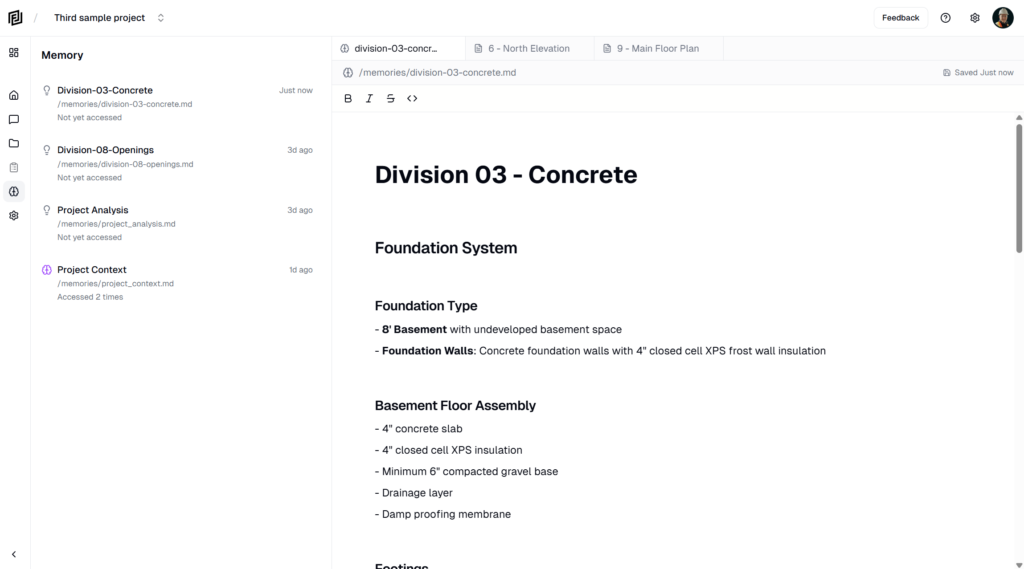
When you upload a document, Framework’s AI automatically classifies it into a category based on its content. This keeps your document tree organized without any manual effort.
How Classification Works
During the processing stage, the AI reads the document content and assigns it to one of the predefined categories. The classification is based on the actual content of the document — not the filename.
Document Categories
| Category | What It Includes |
|---|---|
| Specifications | Project specifications, technical requirements, CSI/MasterFormat sections |
| Drawings | Architectural, structural, mechanical, electrical, and civil drawings |
| Submittals | Product data, shop drawings, material certifications |
| RFIs | Requests for Information and responses |
| Reports | Inspection reports, test results, engineering reports |
| Contracts | Agreements, general conditions, supplementary conditions |
| Correspondence | Letters, memos, meeting minutes, emails |
| Other | Documents that don’t fit the above categories |
Viewing Classifications
In the Documents sidebar, files are grouped under their category headings in the document tree. Each category shows as a collapsible folder — click to expand and see the files within it.
Reclassifying Documents
If the AI misclassifies a document, you can manually change its category. This is rare but can happen with unusual document types or documents that contain mixed content.
Note: Classification accuracy improves as you upload more documents of the same type, since the AI learns the patterns typical to your project.