A scope of work draws the line around a package: what’s in, what’s out and what’s expected. Written so your superintendent and your estimator read it the same way.
What you get
- Three formats – A standalone scope of work, a request for quotation with the RFQ terms around it, or a proposal to your client.
- Included work – Numbered, one item per line, citing the governing drawings and spec sections, with blocking, cutting and patching, firestopping, hoisting and cleanup covered.
- The usual fights, settled – Who provides layout, temporary power, scaffolding, disposal and protection of finished work.
- Exclusions – Everything a reasonable bidder might assume is in but isn’t.
- Deliverables and clarifications – Dates from the master schedule where one exists, plus site conditions, access, hours, permits, bonding, insurance and holdback.
How it works
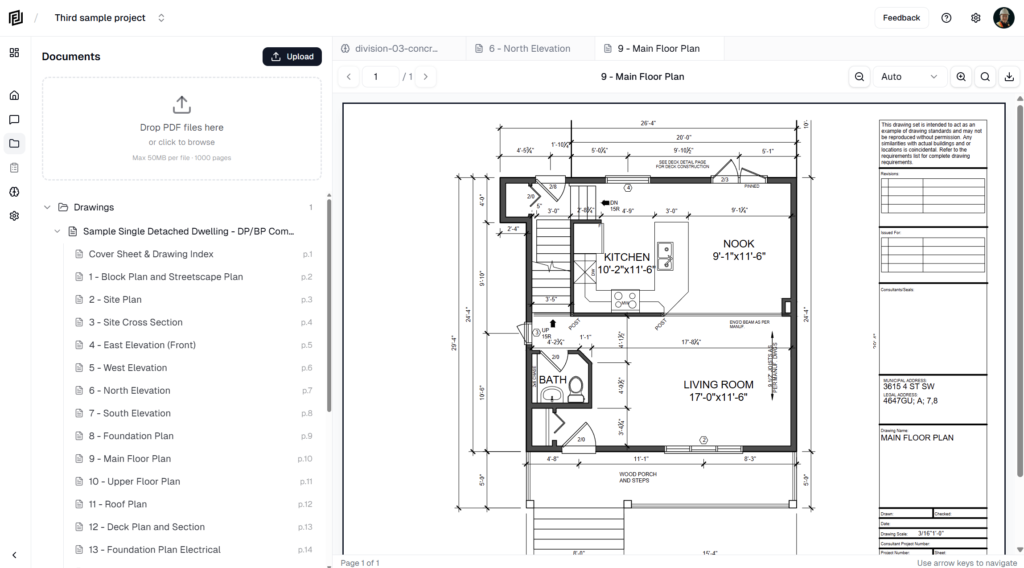
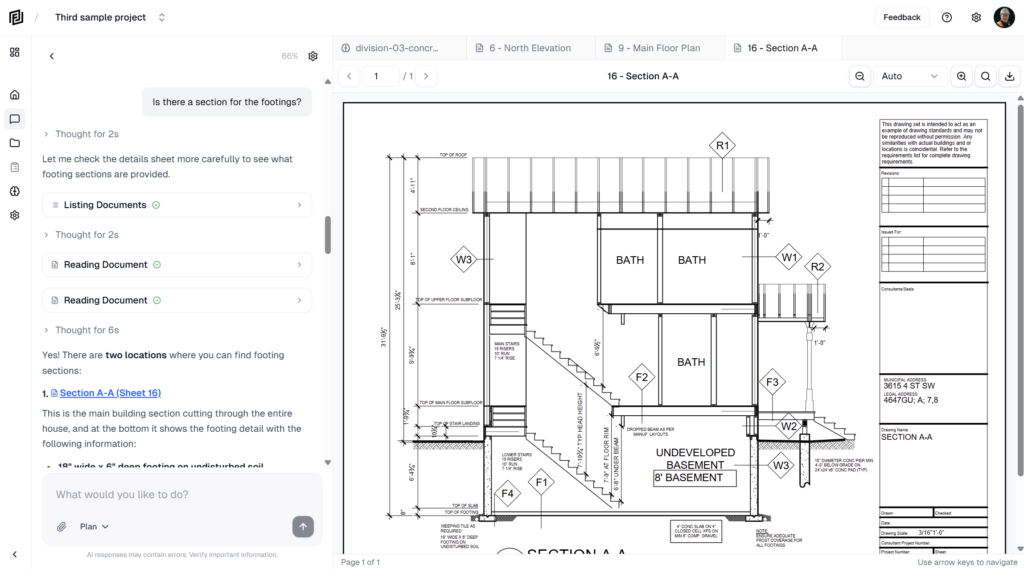
- The agent reads the drawings, specs and existing notes, and finds the sheets and sections that govern the package.
- It confirms the trade, who the scope is for, the contract form and whether pricing is being requested now.
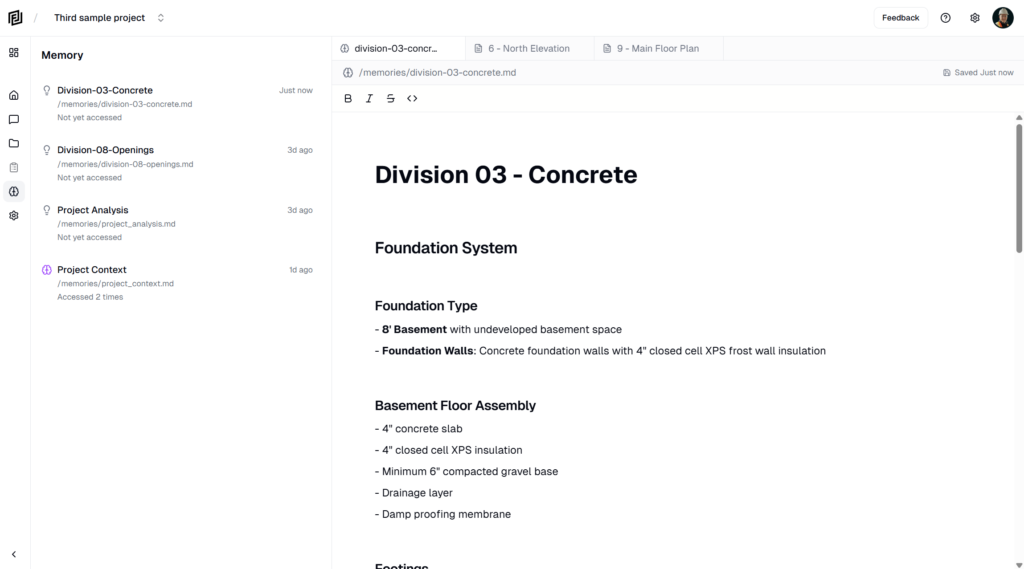
- It writes the project’s own scope from its documents, using the trade’s usual scope as a guide to topics, exclusions and interfaces.
- It checks every drawing and spec number cited exists in the project, then summarizes the key inclusions, the exclusions most likely to be contested and the open questions.
Try asking
- Write the drywall and framing scope for the tender. We need pricing now.
- Put together an RFQ for the curtain wall package, include the mock-up and testing.
- Draft a scope for the site services sub, make sure the tie-ins at the street are clear.